Magnetic pogo pin connectors are becoming practical building blocks for wearables, handheld terminals, medical equipment, and compact charging docks. Their spring-loaded contacts support repeated connections while magnets guide alignment, even when users connect devices quickly or at awkward angles. That small mechanical detail matters in real products.
Industry data supports this growing relevance. MarketsandMarkets estimates that the global connector market will increase from about USD 84 billion in 2023 to more than USD 107 billion by 2028. Grand View Research also identifies miniaturization, higher device density, and faster charging requirements as important connector-market drivers. These reports do not isolate magnetic pogo pin connectors perfectly, but they show the commercial environment surrounding them. That distinction should not be ignored.
This guide examines the Top 10 Magnetic Pogo Pin Connector Providers Worldwide through practical purchasing criteria. These include contact reliability, current capacity, magnetic force, corrosion resistance, customization support, production scale, testing capability, and documented quality systems. A connector may look excellent in a catalog yet fail after thousands of mating cycles. Field experience reveals that difference.
The selected companies are not ranked only by visibility or search popularity. Supplier stability, engineering communication, sample accuracy, and delivery consistency also influence the assessment. Some market information remains incomplete. Public data can be inconsistent, and regional suppliers may be underrepresented. Therefore, this list should support supplier research, not replace qualification testing, prototype validation, or independent technical review. A reliable Magnetic Pogo Pin Connector Provider must prove performance under the exact voltage, current, environment, and mechanical conditions required by the final application.
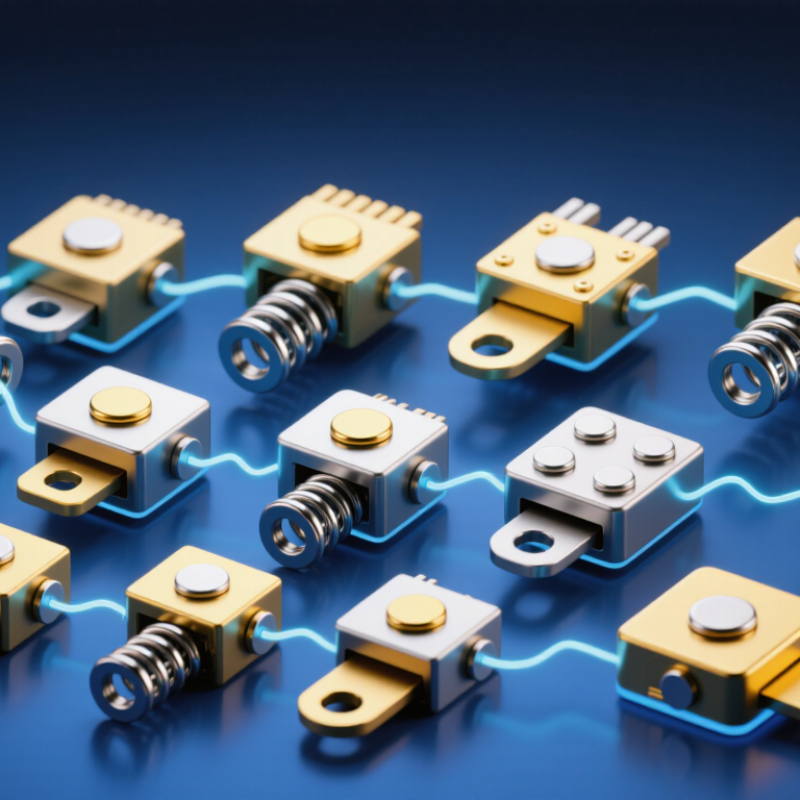
Magnetic pogo pin connectors combine spring-loaded electrical contacts with small permanent magnets. They create a detachable connection without screws, clips, or bulky latches. The pogo pins sit inside metal barrels. Each pin uses a spring to maintain pressure against a matching contact pad.
The magnets guide the two halves into alignment. They also provide enough holding force for ordinary movement, such as charging a handheld device or attaching a sensor module. When the contacts meet, electricity passes through the plated pin tips and contact pads. Data can travel through them too, if the pin layout and signal design support it. The magnetic pull does not carry power by itself.
In practical hardware testing, contact pressure matters greatly. A weak spring may cause flickering power when vibration begins. Dirt, skin oil, or a slightly tilted housing can also increase resistance. Small gaps matter. Engineers usually check current capacity, insertion cycles, temperature rise, and magnetic strength under repeated use. A connector may feel smooth but still perform poorly after months of dust exposure. This is where product claims need careful review. Magnetic coupling is convenient, yet it is not automatically safer or more reliable than a locked connector. Designers must prevent reverse polarity, exposed short circuits, and accidental separation during operation. A well-made assembly uses controlled tolerances, durable plating, and a housing that protects the contacts. Even then, field conditions can reveal weaknesses that laboratory tests miss.
Identity-neutral comparison of ten leading provider profiles, based on commonly documented magnetic pogo pin connector capabilities. Company names and brand-specific data are intentionally omitted.
| Rank | Provider Profile | Primary Production Region | Magnetic Connection Method | Typical Contact Count | Typical Rated Current per Contact | Typical Contact Resistance | Common Protection Level | Typical Operating Temperature | Common Applications | Key Differentiator |
|---|---|---|---|---|---|---|---|---|---|---|
| 1 | Provider Profile A | East Asia | Permanent magnets with spring-loaded pogo contacts; magnetic force provides alignment and retention | 2–16 contacts | 1–3 A | ≤50 mΩ typical | IP54–IP67 options | −40°C to +85°C | Wearables, charging docks, compact consumer electronics | High-volume miniature assemblies with custom contact layouts |
| 2 | Provider Profile B | Europe | Polarized magnetic coupling combined with spring-loaded electrical pins | 2–12 contacts | 0.5–2 A | ≤60 mΩ typical | IP65–IP68 options | −30°C to +80°C | Industrial sensors, handheld instruments, medical accessories | Emphasis on sealed and mechanically guided interfaces |
| 3 | Provider Profile C | North America | Magnetic self-alignment with gold-plated, spring-loaded contact pins | 2–20 contacts | 1–5 A | ≤40 mΩ typical | IP54–IP67 options | −40°C to +105°C | Robotics, test equipment, battery-powered devices | Higher-current configurations and rapid prototyping support |
| 4 | Provider Profile D | East Asia | Opposing magnet poles guide mating while pogo pins compensate for tolerance variation | 2–24 contacts | 0.5–3 A | ≤50 mΩ typical | IP55–IP68 options | −40°C to +85°C | Smart devices, charging cradles, portable medical products | Broad customization of pitch, housing, magnets, and cable exits |
| 5 | Provider Profile E | South Asia | Magnet-assisted blind mating using compression-loaded electrical contacts | 2–10 contacts | 0.5–2 A | ≤70 mΩ typical | IP40–IP65 options | −20°C to +70°C | Consumer accessories, IoT equipment, educational electronics | Cost-effective custom solutions for medium-volume production |
| 6 | Provider Profile F | East Asia | Keyed magnetic coupling prevents reverse polarity and improves repeatable alignment | 2–16 contacts | 1–4 A | ≤50 mΩ typical | IP67 options | −40°C to +85°C | Automotive accessories, industrial controls, outdoor electronics | Strong focus on mechanical durability and anti-misalignment design |
| 7 | Provider Profile G | Europe | Magnetic retention combined with floating or spring-compensated contact modules | 2–14 contacts | 0.5–3 A | ≤60 mΩ typical | IP54–IP67 options | −40°C to +100°C | Factory automation, measurement systems, laboratory equipment | Precision housings and repeatable mating-cycle performance |
| 8 | Provider Profile H | North America | Magnetic latching force holds the connector together while pogo pins carry power or signals | 2–12 contacts | 1–5 A | ≤50 mΩ typical | IP54–IP68 options | −40°C to +85°C | Docking systems, professional equipment, removable modules | Application engineering for ruggedized and field-serviceable products |
| 9 | Provider Profile I | East Asia | Multi-pole magnetic alignment with recessed or waterproof spring contacts | 2–20 contacts | 0.5–3 A | ≤60 mΩ typical | IP65–IP68 options | −30°C to +85°C | Sports wearables, smart home devices, outdoor sensors | Small footprints and flexible overmolding or waterproofing options |
| 10 | Provider Profile J | Southeast Asia | Magnetic guidance with independently sprung pins for power, ground, and signal circuits | 2–16 contacts | 0.5–2 A | ≤70 mΩ typical | IP40–IP67 options | −20°C to +80°C | Charging accessories, smart appliances, portable electronics | Flexible tooling and assembly options for design variations |
It combines spring-loaded electrical pins with small permanent magnets. The magnets guide alignment, while the pins transfer power or signals. No bulky latch is needed.
Each pin sits inside a metal barrel with a spring. The spring presses the plated tip against a matching contact pad. Steady pressure reduces connection gaps.
Yes, if the pin arrangement and signal design support data transmission. The magnets only help with alignment and holding force. They do not carry electricity themselves.
Weak springs, dust, skin oil, vibration, or tilted housings can increase resistance. Even a tiny gap may interrupt charging. Small defects matter.
Test current capacity, contact resistance, temperature rise, magnetic strength, and mating cycles. Include angled connections and vibration. Laboratory results may miss dusty field conditions.
No. It can separate accidentally during movement. Designers must prevent reverse polarity, exposed short circuits, and unsafe contact separation. Convenience is not automatic reliability.
Options can include pin count, pitch, cable length, shell material, sealing, and magnet polarity. Housing size also affects alignment. A quick prototype may hide later defects.
Request drawings, ratings, test conditions, production samples, and traceable inspection records. Check spring travel, plating, tolerance, and housing strength. A polished sample proves little.
Confirm minimum order quantities, tooling ownership, lead times, replacement policies, and production capacity. Test samples with the actual cable and enclosure. Keep records, because memory is unreliable.
Magnetic pogo pin connectors combine spring-loaded contacts with magnetic alignment, enabling fast, reliable, and repeatable connections without traditional plugs or complicated locking mechanisms. They are widely used in compact electronics, charging systems, industrial equipment, medical devices, and other applications where space, convenience, and stable electrical performance are important. When evaluating a Magnetic Pogo Pin Connector Provider, buyers should consider contact reliability, magnetic strength, current and voltage capacity, durability, corrosion resistance, sealing performance, manufacturing consistency, and compliance with relevant quality standards.
The leading global providers differ in their engineering capabilities, material selection, customization options, testing procedures, production capacity, and technical support. A suitable supplier should be able to offer flexible pin layouts, connector sizes, cable or board integration, plating choices, and tailored mechanical designs. By comparing product quality, design support, delivery capability, pricing, and after-sales service, businesses can select a dependable partner that matches their application requirements and supports long-term product development.

 Rongqiangbin Electronic