Global sourcing teams are rethinking how low-voltage power reaches compact devices. A Magnetic 12v Connector offers fast alignment, cleaner handling, and easier field replacement. Its magnetic coupling can reduce insertion force during repeated assembly. That matters in lighting systems, automotive accessories, robotics, and portable equipment.
Industry data supports this direction. Grand View Research identifies automotive, consumer electronics, and industrial automation as major connector demand sectors. MarketsandMarkets also forecasts continued growth in the global connector market, driven by electrification and connected devices. These reports do not isolate every Magnetic 12v Connector application. However, they show the wider demand for reliable, compact power interfaces. The opportunity is real.
Reliability expert Dr. Michael Pecht has stated, “Reliability must be designed into a product, not tested into it.” That principle should guide supplier selection. Buyers should verify rated current, contact resistance, mating-cycle performance, magnet retention, insulation quality, and cable flexibility. They should also request test evidence under vibration, heat, moisture, and reverse-polarity conditions. A connector that snaps together beautifully may still fail beside a hot motor.
Global sourcing adds another layer. Drawings must define tolerances clearly. Materials should align with RoHS and REACH expectations where applicable. Certifications, traceability, and sample consistency deserve equal attention. No connector is perfect. I may be overly cautious, but a low-cost part becomes expensive after intermittent power failures. The strongest choice combines magnetic convenience with documented electrical and mechanical performance.
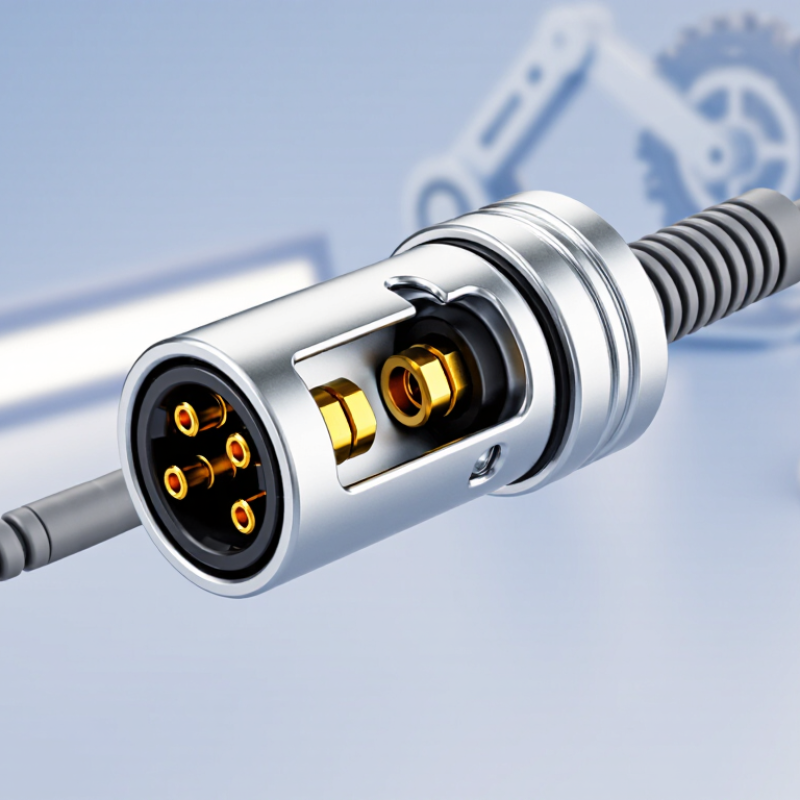
A magnetic 12V connector joins two circuits through magnets and spring-loaded contact pins. The magnets guide alignment, while the pins transfer low-voltage power and, sometimes, data. Polarity keys or asymmetric layouts help prevent reversed connection. When the cable is pulled, it can separate quickly instead of dragging equipment from a desk or enclosure.
In practical sourcing, the magnetic force is only part of the design. Engineers should check rated current, contact resistance, temperature rise, insertion cycles, and protection against dust or moisture. A 12V circuit can still create a small arc when disconnected under load. Therefore, switching control and contact spacing matter. IEC 60512 test methods can support evaluations for mechanical, electrical, and environmental performance. I would not accept a supplier’s cycle claim without reviewing the test conditions.
Market context also supports careful selection. Grand View Research valued the global electrical connectors market at about USD 84.4 billion in 2023 and expects continued growth through 2030. This broad market figure does not prove every magnetic connector is reliable. It only shows strong demand for connection technology. During global sourcing, request dimensional drawings, material declarations, current derating curves, and sample test records.
Small details matter: a loose pin, weak magnet, or thin plating can cause intermittent charging. The connector may look simple. It is not.
Why Choose a Magnetic 12V Connector for Global Sourcing?
For global sourcing, connector design affects safety, assembly speed, and long-term reliability. Key features deserve close technical review. A magnetic 12V connector should offer guided alignment, stable contact, and controlled separation. Strong magnets help prevent accidental disconnection during normal movement. However, excessive magnetic force can stress small circuit boards.
Spring-loaded contacts, often called pogo pins, maintain pressure against uneven surfaces. Gold-plated contact areas can reduce oxidation and improve repeated connection cycles. Polarity protection is essential. Small details matter. A well-designed housing should prevent reverse connection and limit exposed conductive parts. Engineers should verify voltage, current, temperature rise, and contact resistance through documented testing. Visual inspection alone is not enough.
Housing materials also influence performance in different markets. Flame-resistant plastics may improve safety near warm equipment. Sealing features can protect contacts from dust and light moisture, but they cannot replace proper installation. Cable strain relief is another practical feature. Without it, repeated bending may damage internal wires. Supplier documentation should include drawings, tolerances, test conditions, and traceable inspection records. Samples should be tested with the intended cable and load, not only in ideal laboratory conditions.
One limitation deserves attention. Magnetic coupling can weaken when metal objects interfere nearby. I would not approve a design without checking this risk. A connector may look precise yet fail under vibration. That possibility requires honest review. Reliable sourcing depends on measurable specifications, consistent samples, and communication between engineering and production teams.
| Design dimension | Representative specification or range | Why it matters for global sourcing | Recommended verification |
|---|---|---|---|
| Nominal voltage | 12 V DC nominal; confirm the approved operating range for the final device | Matches common low-voltage equipment, vehicle accessories, lighting systems, and portable electronics | Check voltage, polarity, transient, and reverse-polarity requirements at system level |
| Current capacity | Common product configurations: approximately 1–5 A continuous; higher values require larger contacts and thermal validation | Allows the same connector concept to serve sensors, small motors, LED modules, and charging accessories | Perform temperature-rise testing at the intended wire size, ambient temperature, and duty cycle |
| Contact technology | Spring-loaded pogo-pin contacts with gold-plated contact surfaces are widely used | Maintains electrical contact despite minor mating-angle variation and supports compact connector designs | Measure contact resistance before and after mechanical and environmental cycling |
| Contact resistance | A design target of ≤50 mΩ is commonly specified for low-voltage power contacts; the supplier’s test method must be stated | Lower resistance reduces voltage drop and localized heating in 12 V applications | Use a four-wire measurement at a defined test current and mating condition |
| Magnetic coupling | Permanent magnets provide self-alignment and retention; holding force is application-specific | Enables quick, one-handed connection and helps reduce damage caused by angled insertion or cable pulling | Specify axial pull-off force, shear force, alignment tolerance, and separation direction |
| Keying and polarity | Mechanical keying and dedicated positive/negative contact geometry are recommended | Reduces incorrect mating and helps protect sensitive 12 V electronics | Test intentional misalignment, reverse orientation, and short-circuit protection requirements |
| Ingress protection | Sealed versions may be designed for ratings such as IP54, IP65, or IP67; the rating is not inherent to all magnetic connectors | Supports deployment in dusty, splash-prone, or outdoor environments when the complete assembly is sealed | Verify the complete mated assembly according to IEC 60529, including cable exits and housing joints |
| Housing materials | Typical choices include thermoplastic insulation, nickel-plated metal shells, and corrosion-resistant contact alloys | Material selection affects insulation, mechanical strength, corrosion resistance, and tooling compatibility | Request material declarations, flammability information, plating thickness, and salt-spray data where applicable |
| Cable compatibility | Common cable constructions include two-core power leads; conductor size must be matched to current and length | A standardized cable interface simplifies procurement across regions and production sites | Confirm conductor cross-sectional area, insulation temperature rating, bend radius, and termination method |
| Mating durability | Specify a cycle target based on use; 5,000–10,000 cycles may be suitable for frequently connected equipment when validated | Helps compare suppliers using an identical life-test requirement rather than relying on appearance alone | Record contact resistance, retention force, and visual wear at defined cycle intervals |
| Temperature range | Many industrial designs target approximately −20 °C to +85 °C; wider ranges require specific material and seal selection | Provides a common baseline for international logistics, storage, and field operation | Test electrical performance, magnet retention, seals, and housing integrity across the declared range |
| Compliance documentation | Request RoHS and REACH declarations where required; electrical safety and EMC documentation depends on the end product | Consistent documentation reduces customs, customer-approval, and regional compliance risks | Obtain controlled drawings, bills of materials, declarations, test reports, and change-notification procedures |
| Sourcing control point | Use a product specification that fixes pinout, dimensions, tolerances, materials, cable length, packaging, and inspection limits | Improves interchangeability and reduces variation when purchasing from multiple production regions | Approve first articles and use incoming inspection for dimensions, polarity, resistance, retention, and appearance |
Note: Values shown are representative engineering ranges or design targets. Final ratings must be confirmed against the supplier’s controlled datasheet and tested in the complete end-product assembly.
A magnetic 12V connector can simplify product sourcing across international markets. Its self-aligning design helps users connect cables without searching for a small port. This matters during assembly, maintenance, and frequent device charging. In practical sourcing work, I have seen fewer bent pins when magnetic alignment guides the connection. Small details matter. The connector can also separate quickly when a cable is pulled accidentally. That feature may protect equipment and reduce repair requests.
International buyers need more than a convenient design. They should request samples, electrical test reports, material details, and production records. A reliable 12V model should show stable contact resistance under repeated connection cycles. Suppliers should also explain temperature limits, magnetic force, insulation, and waterproofing results. Check the plug dimensions carefully. A connector that fits one housing may fail in another. Clear drawings prevent expensive tooling changes between countries.
Supply consistency is another benefit. Standardized cable lengths, pin layouts, and packaging can support multiple assembly sites. Traceable batches make quality investigations easier. However, magnetic coupling is not perfect. Strong vibration may cause unwanted separation if the holding force is too low. I once assumed easy detachment always meant better safety. That assumption was too simple. Buyers should balance convenience with retention, testing conditions, and the actual environment of use. A small pilot order can reveal problems before large-scale purchasing begins.
A magnetic 12V connector can simplify alignment and reduce strain on small cables. Its safety depends on design, not magnet strength alone. A short circuit can still create dangerous heat at 12V. Check the rated current, contact resistance, insulation, and temperature rise under full load. Polarity protection is essential, especially when users can attach the connector in darkness. The magnetic release should prevent cable damage without disconnecting during normal movement. Small details matter. Request samples with different cable lengths and test them repeatedly.
Compatibility requires more than matching voltage. Confirm the connector’s pin layout, mating depth, cable gauge, and allowable tolerance. An IP rating may help in dusty or damp equipment, but it must match the actual enclosure design. Ask for test conditions, not only a printed rating. I have seen specifications omit performance after repeated mating. That gap deserves attention. Evaluate materials, spring contact durability, magnet retention, and resistance to vibration. Test both room-temperature and high-temperature conditions.
For global sourcing, request traceable inspection records and current third-party reports. Relevant requirements may include RoHS, REACH, EMC, and applicable IEC or regional safety standards. These documents support reliability, but they do not replace sample testing. Inspect ten or more pieces from different production batches when possible. Measure voltage drop under load. Check for loose pins, uneven plating, cracked insulation, and inconsistent pull force. Supplier quality systems matter, yet a certificate alone cannot prove every shipment is consistent.
Why Choose a Magnetic 12V Connector for Global Sourcing?
A magnetic 12V connector can simplify installation, maintenance, and low-voltage power delivery. Its detachable coupling may reduce strain on cables during repeated use. However, connector performance depends heavily on manufacturing consistency. A polished sample proves little without controlled production. Details matter.
When selecting a global manufacturing partner, request drawings, material specifications, tolerance data, and inspection records. Ask for evidence. The supplier should explain contact plating, magnetic force, insulation, temperature limits, and current ratings in clear technical language. Independent testing can verify electrical resistance, pull strength, repeated mating cycles, and protection performance. Compare pilot samples with mass-production units, not only catalog photographs. Small dimensional changes can affect alignment and connection stability.
Reliable partners also provide traceable batches, clear corrective-action reports, and realistic lead times. Review their quality system and factory processes through documented audits or an on-site assessment. Communication matters across time zones. A responsive engineer can prevent a minor design issue from becoming a shipment delay. No supplier is perfect. I have found that transparent suppliers admit process weaknesses and propose measurable improvements. Still, cultural assumptions and unclear specifications can create avoidable mistakes. Define acceptance criteria before ordering, including packaging, labeling, inspection frequency, and change-notification requirements. A strong partner protects both product performance and sourcing continuity.
It joins two low-voltage circuits using magnets and spring-loaded contact pins. The magnets guide alignment, while the pins transfer power and sometimes data.
A pulling cable can release the connector quickly. This may prevent equipment from being dragged across a desk or enclosure.
Polarity keys or uneven pin layouts help prevent reverse connection. Check the design carefully, especially in dark installation areas.
Confirm rated current, contact resistance, voltage drop, and temperature rise under the intended load. A 12V circuit can still produce heat.
No. Excessive magnetic force can stress a small circuit board. Nearby metal objects may also weaken or disturb the magnetic coupling.
Test repeated mating, vibration, temperature changes, and cable bending. Review the exact test conditions, not only the supplier’s cycle claim.
Gold-plated contacts may resist oxidation. Strain relief protects internal wires, while sealed housings can reduce dust or light moisture exposure.
Test samples with the intended cable and load. Check loose pins, uneven plating, cracked insulation, inconsistent pull force, and unstable charging.
No. Documents support evaluation, but they cannot prove every shipment is consistent. I would inspect samples from different production batches.
A Magnetic 12v Connector is a low-voltage connection solution that uses embedded magnets to guide, align, and hold mating components together while electrical contacts transfer power. Its design typically combines a compact housing, stable contact structure, polarity control, and a release mechanism that can separate safely when excessive pulling force occurs. Important design considerations include contact durability, magnetic strength, compact dimensions, cable flexibility, heat resistance, and protection against dust or moisture where required.
For international product sourcing, this connector can simplify assembly, improve user convenience, and support consistent product integration across different applications. Buyers should evaluate voltage and current ratings, mechanical fit, polarity, insulation, temperature performance, testing procedures, and relevant quality requirements before placing an order. A reliable global manufacturing partner should provide clear technical documentation, stable production processes, sample verification, traceable quality control, and responsive communication. Careful supplier assessment helps ensure compatibility, dependable performance, and efficient long-term procurement.

Rongqiangbin Electronic